Organoids
Allows in vitro testing of different ADCs on a patient’s cells to observe their potential effectiveness.
Organoids are mini-tumors grown from a patient’s cells in three dimensions, in an environment closely mimicking the human body. They faithfully reproduce the characteristics of the original tumor.
In the OASIS program, patient-derived organoids are used as functional models to study tumor behavior in a controlled laboratory setting. These three-dimensional cultures closely mimic the structure and biology of the original tumor, making it possible to evaluate sensitivity or resistance to antibody–drug conjugates (ADCs).
Organoids provide a powerful bridge between molecular analyses and treatment response, supporting the development of more predictive and personalized therapeutic strategies.
How does it work?
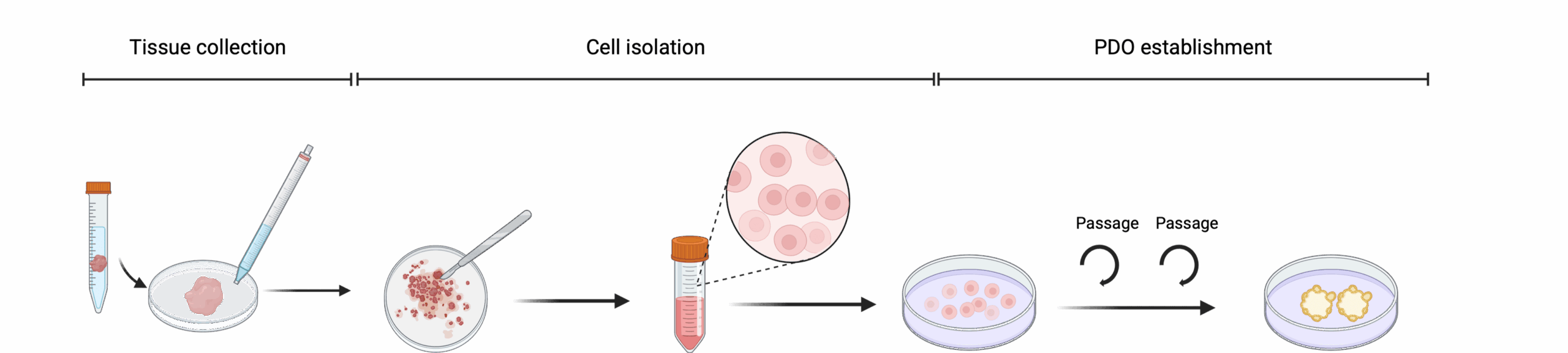
Organoids are generated from patient tumor samples and grown in a three-dimensional matrix that supports cell organization and growth. Under defined culture conditions, tumor cells self-organize into structures that reproduce key features of the original tissue.
These organoids can then be exposed to therapeutic agents, including ADCs, and analyzed using viability assays and molecular profiling to assess treatment effects in a reproducible and scalable manner.